O livro é uma coisa espantosa. É um objecto plano, feito a partir de uma árvore . É montado com um conjunto de partes planas e flexíveis (que ainda são chamadas de "folhas") onde estão impressos rabiscos de pigmento preto. Basta dar-lhe uma olhada e começámos a ouvir a voz de outra pessoa, talvez de alguém que já morreu há milhares de anos. O seu autor fala através dos milénios de forma clara e silenciosa, dentro da nossa cabeça, directamente para nós. A escrita é talvez a maior das invenções humanas, que junta pessoas, cidadãos de outras épocas, que nunca se conheceram. Os livros quebram as correntes do tempo e são a prova de que os humanos conseguem fazer magia. - Carl Sagan
Mostrar mensagens com a etiqueta neil gaiman. Mostrar todas as mensagens

quinta-feira, 7 de novembro de 2013

'Anansi Boys' - Neil Gaiman


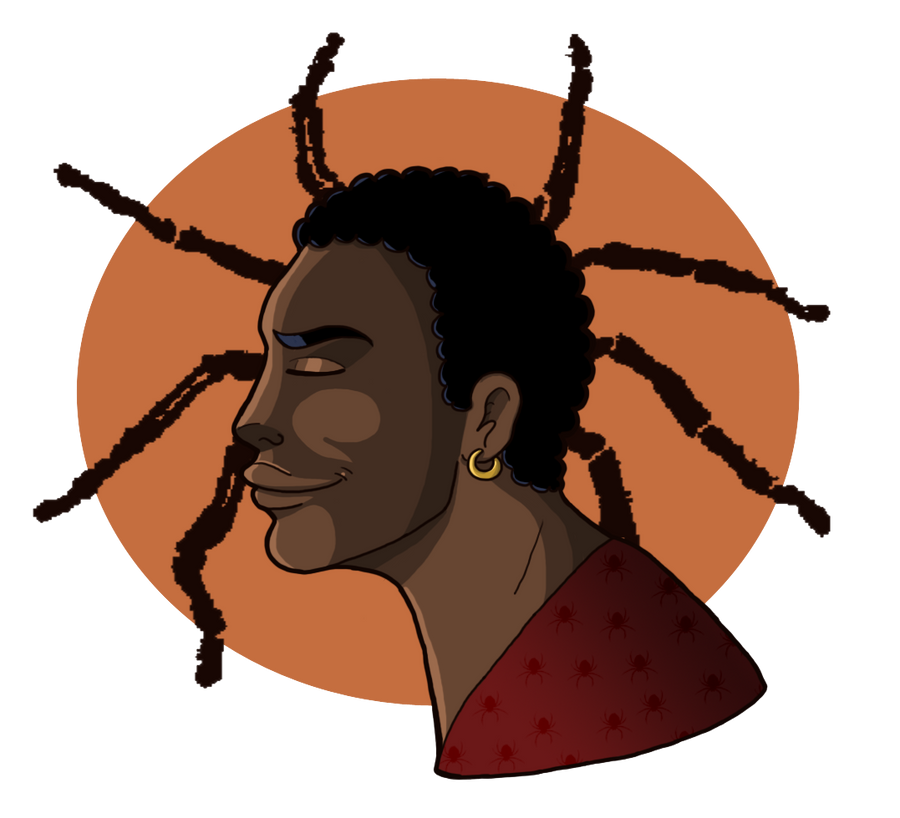
"Spider was having a great day at the office. He almost never worked in offices. He almost never worked. Everything was new, everything was marvelous and strange, from the tiny lift that lurched him up to the fifth floor, to the warrenlike offices of the Grahame Coats Agency. He stared, fascinated, at the glass case in the lobby filled with dusty awards. He wandered through the offices, and when anyone asked him who he was, he would say 'I'm Fat Charlie Nancy', and he'd say on in his god-voice, which would make whatever he said practically true.
He found the tea-room, and made himself several cups of tea. Then he carried them back to Fat Charlie's desk, and arranged them around it in an artistic fashion. He started to play with the computer network. It asked him for a password. 'I'm Fat Charlie Nancy,' he told the computer, but there was still places it didn't want him to go, so he said, 'I'm Grahame Coats,' and it opened to him like a flower.
He looked at things in the computer until he got bored.
He dealt with the contents of Fat Charlie's in-basket. He dealt with Fat Charlie's pending basket.
It occurred to him that Fat Charlie would be waking up around now, so he called him at home, in order to reassure him; he just felt that he was making a little headway when Grahame Coats put his head round the door, ran his fingers across his sloat-like lips, and beckoned.
'Gotta go," Spider said to his brother. 'The big boss needs to talk to me.' He put down the phone.
'Making private phone calls on company time, Nancy,' stated Grahame Coats.
'Abso-friggin'-lutely,' agreed Spider.
'And was that myself you were referring to as "the big boss"?' asked Grahame Coats. They walked to the end of the hallway, and into his office-
'You're the biggest,' said Spider. 'And the bossest.'
Grahame Coats looked puzzled; he suspected he was being made fun of, but he was not certain, and this disturbed him.
'Well, sit ye down, sit ye down,' he said.
Spider sat him down.
It was Grahame Coats's custom to keep the turnover of staff at the Grahame Coats Agency fairly constant. Some people came and went. Others came, and remained until just before their jobs would begin to carry some kind of employment protection. Fat Charlie had been there longer than anyone: one year and eleven months. One month to go before redundancy payments or industrial tribunals could become a part of his life.
There was a speech that Grahame Coats gave, before he fired someone. He was very proud of his speech.
'Into each life,' he began, 'a little rain must fall. There's no cloud without a silver lining.'
'It's an ill wind,' offered Spider, 'that blows no one good.'
'Ah. Yes. Yes indeed, Well. As we pass through this vale of tears, we must pause to reflect that-'
'The first cut,' said Spider, 'is the deepest.'
'What? Oh.' Grahame Coats scrambled to remember what came next. 'Happiness,' he pronounced, 'is like a butterfly.'
'Or a bluebird,' agreed Spider.
'Quite. If I may finish?'
'Of course. Be my guest,' said Spider, cheerfully.
'And the happiness of every soul at the Grahame Coats Agency is as important to me as my own.'
'I cannot tell you,' said Spider, 'how happy that made me.'
'Yes,' said Grahame Coats.
'Well, I better get back to work,' said Spider. 'It's been a blast, though. Next time you want to share some more, just call me. You know where I am.'
'Happiness,' said Grahame Coats. His voice was taking on a faintly strangulated quality. 'And what I wonder, Nancy, Charles, is this - are you happy here? And do you not agree that you might be rather happier elsewhere?'
'That's not what I wonder,' said Spider. 'You know what I wonder?'
Grahame Coats said nothing. It had never gone like this before. Normally, at this point, their faces fell, and they went into shock. Sometimes they cried. Grahame Coats had never minded when they cried.
'What I wonder,' said Spider, 'is what the accounts in the Cayman Islands are for. You know, because it almost sort of looks like money that should go to our client accounts sometimes just goes into the Cayman Islands accounts instead. And it seems a funny sort of way to organise the finances, for the money coming in to rest in those accounts. I've never seen anything like it before. I was hoping you could explain it to me.'
Grahame Coats had gone off-white - one of those colours that turn up in paint catalogues with names like Parchment or Magnolia. He said, 'How did you get access to those accounts?'
'Computers,' said Spider. 'Do they drive you as nuts as they drive me? What can you do?'
Grahame Coats thought for several long moments. He had always liked to imagine that his finantial affairs were so deeply tangled that, even if the Fraud Squad were ever able to conclude that finantial crimes had been commited, they would find it extreamly difficult to explain to a jury exactly what kind of crimes they were.
'There's nothing illegal about having offshore accounts,' he said, as carelessly as possible.
'Illegal?' said Spider. 'I should hope not. I mean, if I saw anything illegal, I should have to report it to the appropriate authorities.'

terça-feira, 5 de novembro de 2013

'Neverwhere' - Neil Gaiman


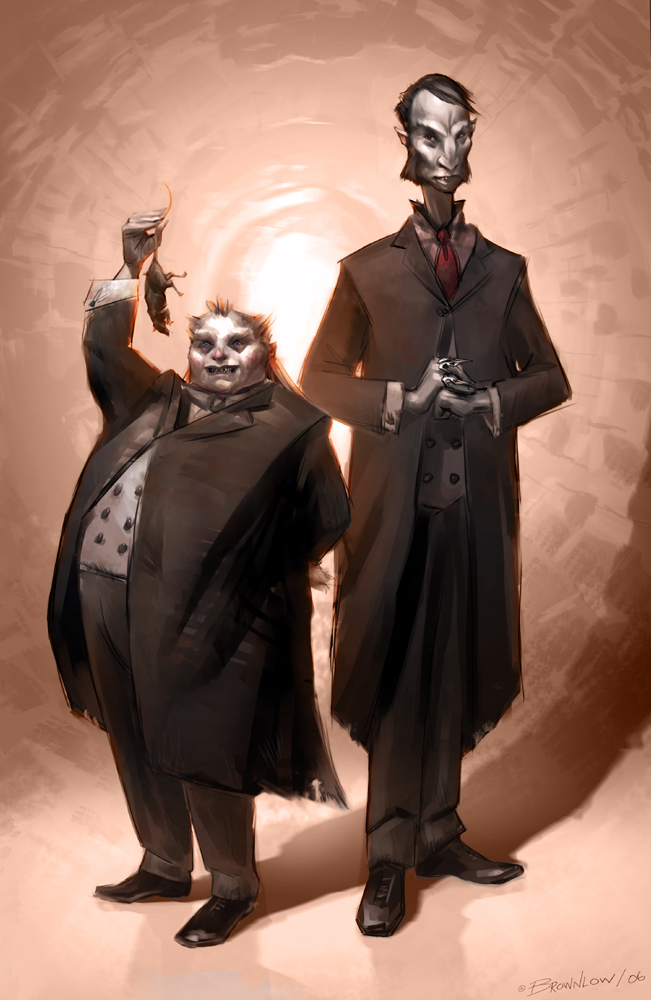
"What," asked Mr Croup, "do you want?"
"What", asked the Marquis de Carabas, a little more rethorically, "does anyone want?"
"Dead things," suggested Mr Vandemar. "Extra teeth."
"I thought perhaps we coul make a deal," said the Marquis.
Mr Croup began to laugh. It sounded like a piece of blackboard being dragged over the nails of a wall of severed fingers. "Oh, Messire Marquis. I think I can confidently state, with no risk of contradiction from any parties here present, that you have taken leave of whatever senses you are reputed to have had. You are," he confided, "if you will permit the vulgarism, completely off your head."
"Say the word," said Mr Vandemar, who was now standing behind the Marquis' chair, "and it'll be off his neck before you can say Jack Ketch."
The Marquis breathed heavily on his fingernails, and polished them on the lapel of his coat. "I have always felt," he said, "that violence was the last refuge of the incompetent, and empty threats the final sanctuary of the terminally inept."
 Mr. Croup glared. "What are you doing here?" he hissed.
 The Marquis de Carabas stretched, like a big cat: a lynx, perhaps, or a huge black panther; and at the end of the stretch he was standing up, with his hands thrust deep in the pockets of his magnificent coat. 
"You are," he said, idly and conversationally, "I understand, Mister Croup, a collector of Tang dynasty figurines."
"How did you know that?"
 "People tell me things. I'm approachable." The marquis's smile was pure, untroubled, guileless: the smile of a man selling you a used Bible.
"Even if I were . . . " began Mr. Croup.
 "If you were," said the Marquis de Carabas, "you might be interested in this." He took one hand out of his pocket and displayed it to Mr. Croup. Until earlier that evening it had sat in a glass case in the vaults of one of London's leading merchant banks. It was listed in certain catalogs as The Spirit of Autumn (Grave Figure). It was roughly eight inches high: a piece of glazed pottery that had been shaped and painted and fired while Europe was in the Dark Ages, six hundred years before Columbus's first voyage.
Mr. Croup hissed, involuntarily, and reached for it. The marquis pulled it out of reach, cradled it to his chest. "No no," said the Marquis. "It's not as simple as that."
"No?" asked Mr. Croup. "But what's to stop us taking it, and leaving pieces of you all over the Underside? We've never dismembered a Marquis before."
"Have," said Mr. Vandemar. "In York. In the fourteenth century. In the rain."
 "He wasn't a marquis," said Mr. Croup. "He was the earl of Exeter."
 "And marquis of Westmorland." Mr. Vandemar looked rather pleased with himself.
 Mr. Croup sniffed. "What's to stop us hacking you into as many pieces as we hacked the marquis of Westmorland?" he asked.
 De Carabas took his other hand out of his pocket. It held a small hammer. He tossed the hammer in the air and caught it by the handle, ending with the hammer poised over the china figurine. 
"Oh, please," he said. "No more silly threats. I think I'd feel better if you were both standing back over there."
Mr. Vandemar shot a look at Mr. Croup, who nodded, almost imperceptibly. There was a tremble in the air, and Mr. Vandemar was standing beside Mr. Croup, who smiled like a skull. "I have indeed been known to purchase the occasional Tang piece," he admitted. "Is that for sale?"
 "We don't go in so much for buying and selling here in the Underside, Mister Croup. Barter. Exchange. That's what we look for. But yes, indeed, this desirable little piece is certainly up for grabs."
Mr. Croup pursed his lips. He folded his arms. He unfolded them. He ran one hand through his greasy hair. Then, "Name your price," said Mr. Croup. 
The marquis let himself breathe a deep, relieved, and almost audible sigh. It was possible that he was going to be able to pull this whole grandiose ruse off, after all. "First, three answers to three questions," he said.
Croup nodded. "Each way. We get three answers too."
 "Fair enough," said the marquis. "Secondly, I get safe conduct out of here. And you agree to give me at least an hour's head start."
 Croup nodded violently. "Agreed. Ask your first question." His gaze was fixed on the statue.
 "First question. Who are you working for?"
 "Oh, that's an easy one," said Mr. Croup. "That's a simple answer. We are working for our employer, who wishes to remain nameless."
 "Hmph. Why did you kill Door's family?"
 "Orders from our employer," said Mr. Croup, his smile becoming more foxy by the moment.
 "Why didn't you kill Door, when you had a chance?"
 Before Mr. Croup could answer, Mr. Vandemar said, "Got to keep her alive. She's the only one that can open the door."
 Mr. Croup glared up at his associate. "That's it," he said. "Tell him everything, why don't you?"
 "I wanted a turn," muttered Mr. Vandemar.
 "Right," said Mr. Croup. "So you've got three answers, for all the good that will do you. My first question: why are you protecting her?"
 "Her father saved my life," said the marquis, honestly. "I never paid off my debt to him. I prefer debts to be in my favor."
"I've got a question," said Mr. Vandemar.
 "As have I, Mr. Vandemar. The Upworlder, Richard Mayhew. Why is he traveling with her? Why does she permit it?"
 "Sentimentality on her part," said the marquis de Carabas. He wondered, as he said it, if that was the whole truth. He had begun to wonder whether there might, perhaps, be more to the upworlder than met the eye.
"Now me," said Mr. Vandemar. "What number am I thinking of?"
 "I beg your pardon?"
 "What number am I thinking of?" repeated Mr. Vandemar. "It's between one and a lot," he added, helpfully.
 "Seven," said the marquis. Mr. Vandemar nodded, impressed. Mr. Croup began, "Where is the--" but the marquis shook his head. "Uh-uh," he said. "Now we're getting greedy."
There was a moment of utter silence, in that dank cellar. Then once more water dripped, and maggots rustled; and the marquis said, "An hour's head start, remember."
 "Of course," said Mr. Croup. The marquis de Carabas tossed the figurine to Mr. Croup, who caught it eagerly, like an addict catching a plastic baggie filled with white powder of dubious legality. And then, without a backward glance, the marquis left the cellar.


sexta-feira, 18 de março de 2011

Deuses Americanos - Neil Gaiman


 Enquanto saiam do Illinois mais tarde nessa noite, Sombra fez a sua primeira pergunta a Quarta-Feira. Viu o sinal de Bem-vindo ao Winsconson e disse:
- Então, quem eram os tipos que me apanharam no parque de estacionamento? O Senhor Madeira e o Senhor Pedra? Quem eram?
As luzes do carro iluminavam a paisagem de Inverno. Quarta-Feira tinha anunciado que não iriam por auto-estradas porque ele não sabia de que lado estavam as auto-estradas, por isso Sombra andava apenas em estradas secundárias. Ele não se importava. Nem sequer tinha a certeza se Quarta-Feira era maluco.
Quarta-Feira resmungou:
- Apenas espectros. Membros da oposição. Chapéus negros.
- Acho, - disse Sombra - que eles acham que são chapéus brancos.
- Claro que acham. Nunca houve uma guerra verdadeira que não fosse travada entre dois grupos de pessoas que tinham a certeza de que estavam certas. As pessoas verdadeiramente perigrosas acreditam que estão a fazer o que quer que seja simplesmente porque é, sem dúvida, a coisa certa. E é isso que as torna perigosas.
- E você? - perguntou Sombra. - Porque está a fazer o que está a fazer?
- Porque quero, - disse Quarta-Feira. E depois sorriu. - Por isso está tudo bem.
Sombra disse:
- Como é que vocês escaparam? Ou será que escaparam?
- Escapámos, - disse Quarta-Feira. - Ainda assim foi por pouco. Se não tivessem parado para te agarrar, podiam ter-nos levado a todos. Convenceu muita da gente que estava na dúvida de que posso não estar completamente maluco.
- Então como escapou?
Quarta-Feira abanou a cabeça.
- Não te pago para fazeres perguntas, - disse ele - Já te tinha dito.